WHAT IS ROWING
Are you ready to
find your crew?
We believe in any place where young people can push their limits, make friends, and find out what they're made of. Rowing just happens to be extraordinary at all of it.
A Brief Introduction
to Rowing
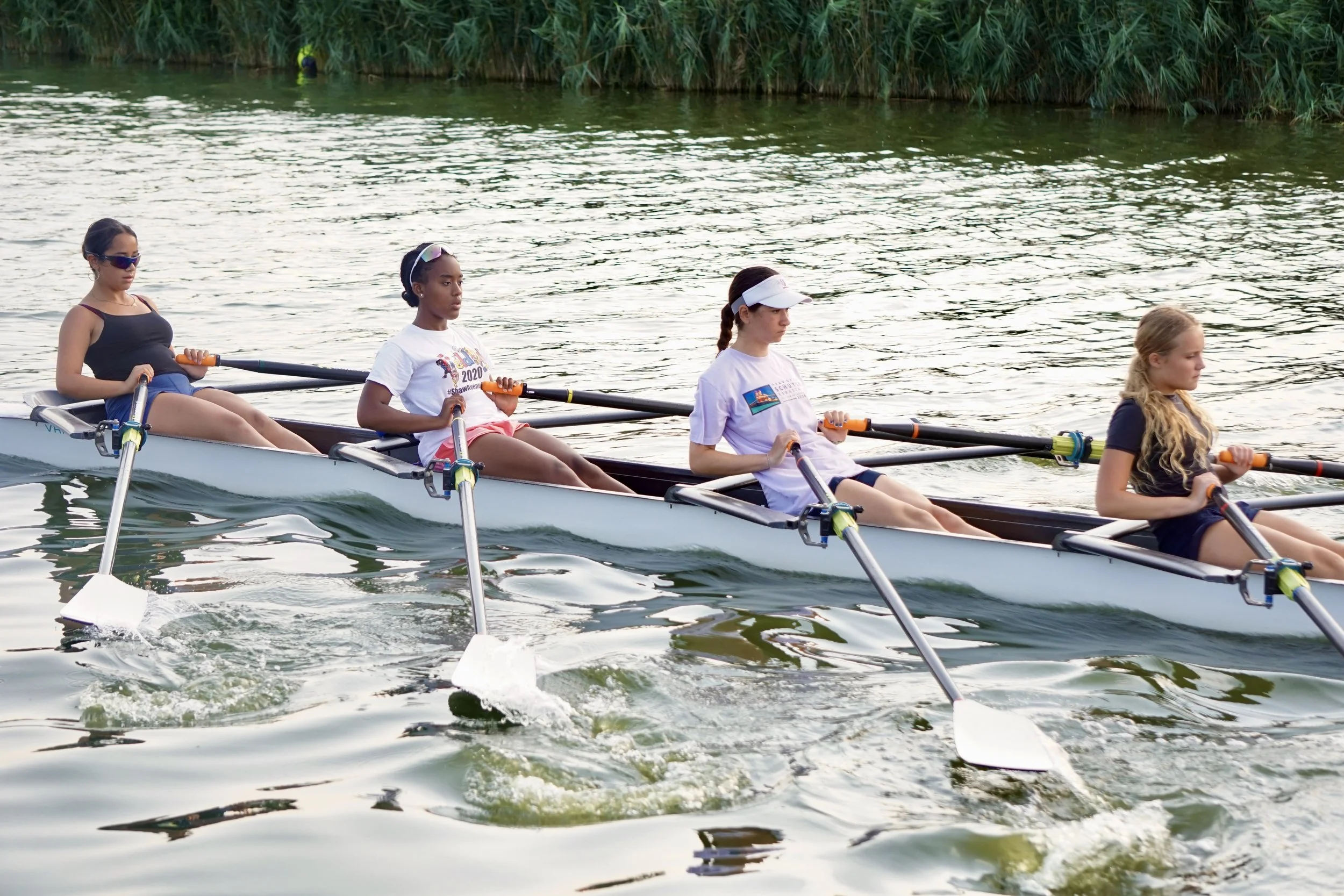
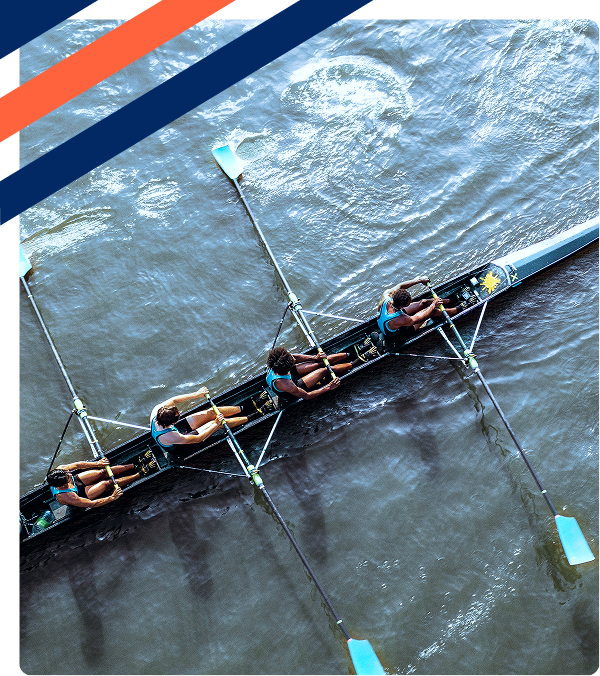
Rowing is a water sport where a crew works together to move a boat using oars. You sit facing backward, push off with your legs, and pull the oar through the water in sync with your teammates. It builds strength, coordination, and teamwork — no experience needed to start.
ROWING 101
A Few Terms Worth
Knowing
-
In the sport of rowing, a rower provides the physical power to move the boat with oars, while a coxswain (pronounced "cox-in") makes sure their crews are safe, go in the right direction, and use a microphone and speaker system throughout the boats to motivate and coach their crews.
While a boat doesn’t move without its rowers, coxswains are also an integral part of the team. -
Sweep rowing uses one long oar per person on one side of the boat, while sculling uses two shorter oars—one in each hand
Sweep oars are longer (about 12.5 feet) and pulled with both hands. Sculling oars (sculls) are shorter (about 9.5 feet) with one oar in each hand.
-
The catch: The part of the stroke at which the oar blade enters the water, ‘catching’ or grabbing hold of the water, and initiates the power to move the boat.
The drive: The “big push” that happens when the oar blade enters the water (‘catch’) until it is removed from the water (‘finish’). This is where your legs do most of the work.
The Finish: The very end of the stroke when the rower takes the blade out of the water, the oar handle close to their chest, and starts to move up the recovery again.
The recovery: The moment after the finish when the rower moves up to the catch and the blade is out of the water.
Don’t worry, these will make sense the more you practice.
-
Sculling uses singles (1x), doubles (2x), and quads (4x). Sweep rowing uses pairs (2-, 2+), fours (4-, 4+), and eights (8+). The number before the symbol always indicates the number of rowers, excluding the coxswain if there is one. “x” indicates a sculling boat, “+” indicates a coxed boat and the “-” indicates a coxless sweep boat.
-
Bow seat: The rower closest to the front of the boat.
Stroke seat: The rower closest to the back of the boat, responsible for setting the pace and rhythm of the boat.
Novice: Beginner rowers who are rowing or racing for the first time.
Port: A rower who rows with the oar on the left side of the boat when facing forward.
Starboard: A rower who rows with the oar on the right side of the boat when facing forward.
“Way enough”: The command to come to a halt, whether walking with the boat on land or rowing.
You will hear these words repeatedly. Don’t worry, you don’t have to memorize these right away. You will learn as you go and get better at understanding them with experience.
If you really want to geek out on the mechanics, here's where to go:
THE DAY-TO_DAY
What to expect when you join
What happens when you show up for the first time? We’ve got you covered with everything you can expect.
Travel Logistics
Public Transportation:
1 Train | Dyckman St. | 10 min walk
A Train | Dyckman St. | 15 min walk
M100 Bus | Dyckman St./10 Av | 5 min walk
Personal Travel:
The Peter Jay Sharp Boathouse is accessible via Harlem River Drive. Parking is not readily available, but can be found nearby on Dyckman Street, 10th Avenue, and some cross streets. Vehicles are welcome to safely drop off in front of P.S.5 Ellen Lurie School. Vehicles are not permitted to drop off on Harlem River Drive.
Arrival at the Boathouse
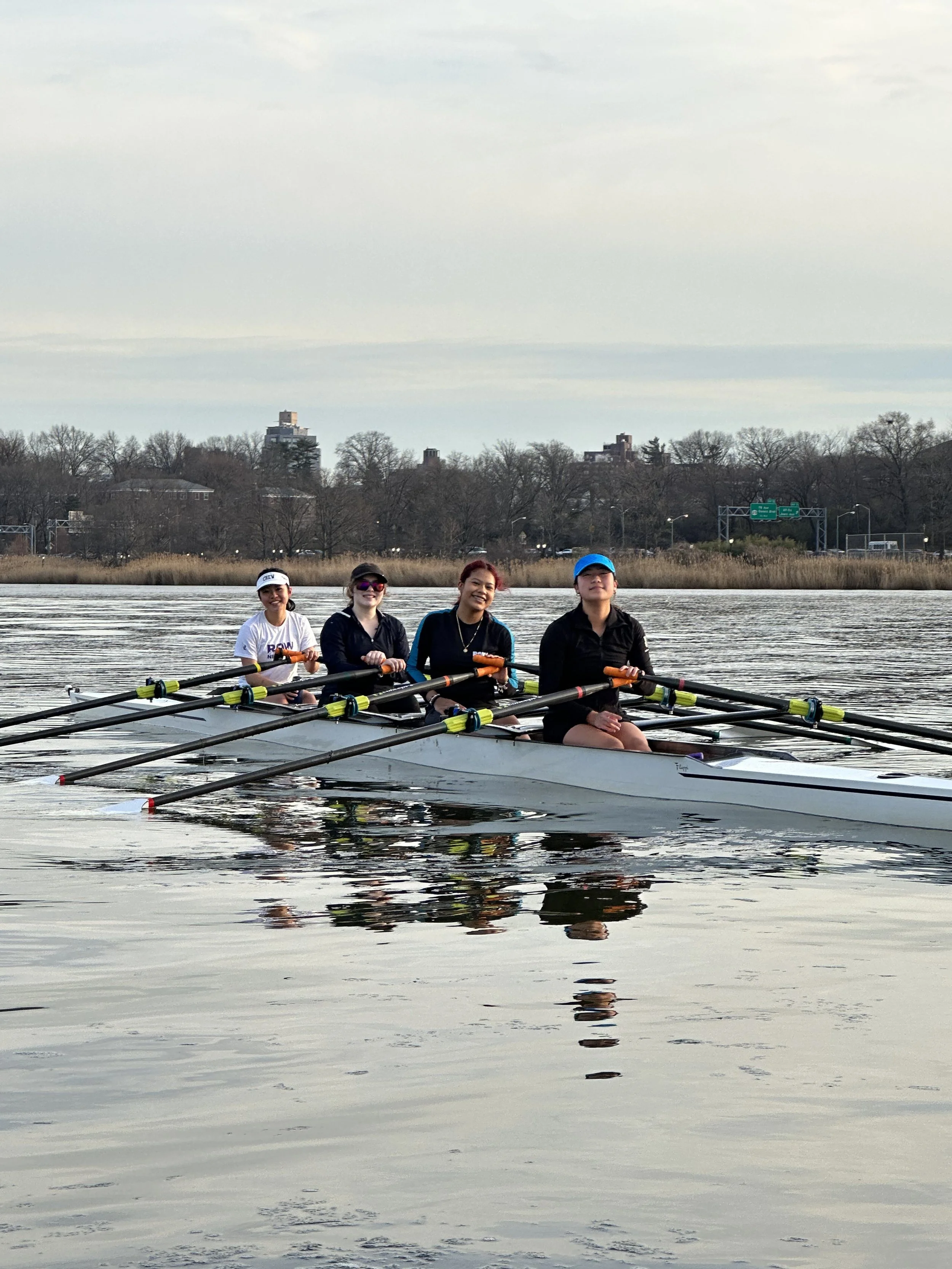
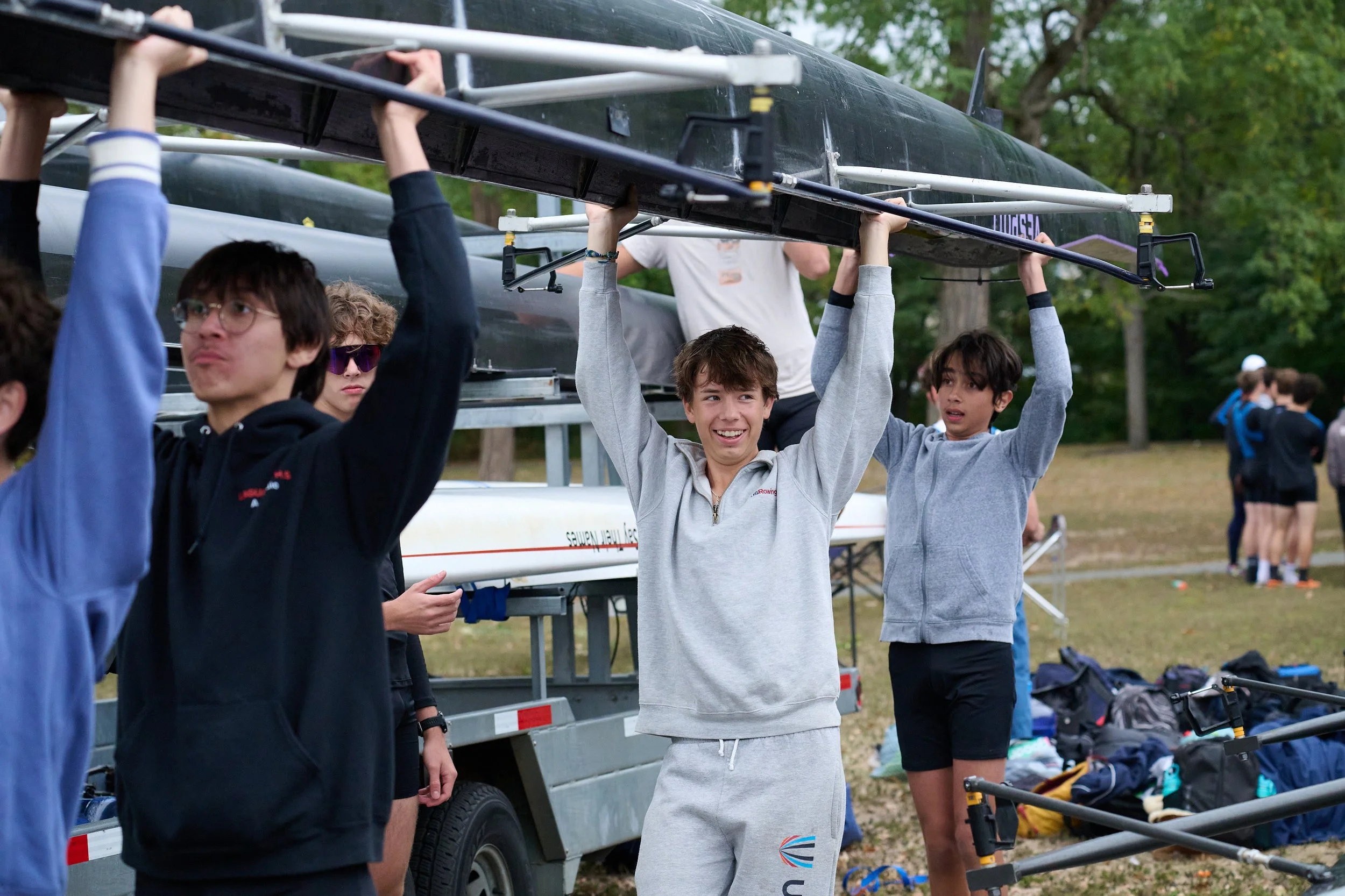
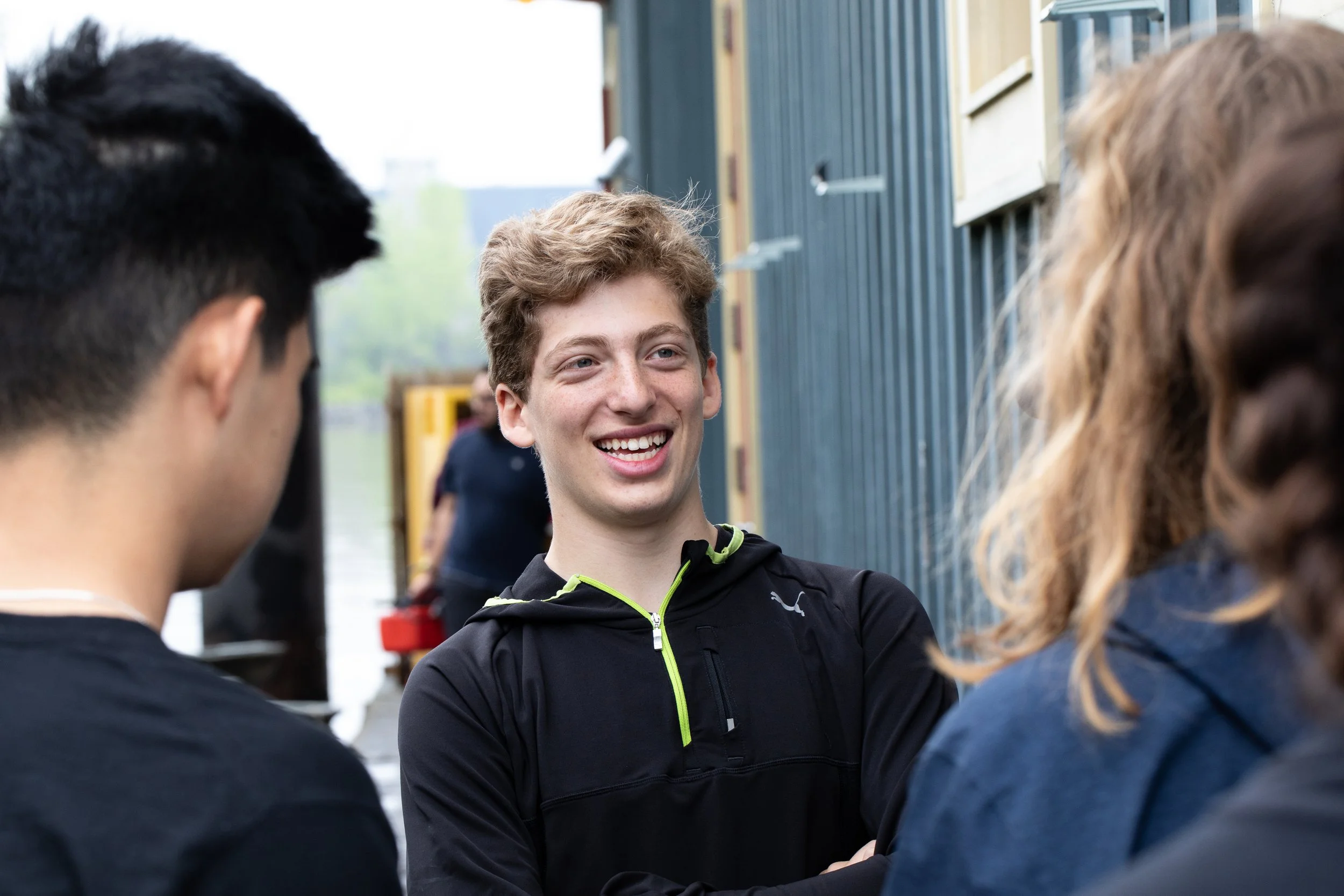
Student-athletes are expected to arrive before 4:30, change if needed, and work collaboratively with their teammates to set up for practice. This includes warming up on the ergometer, getting boats down to the dock with teammates, and helping coaches prepare the safety launch for on-the-water sessions.
On-the-water sessions
Weather permitting, student-athletes will practice on the water for 60-90 minutes doing rowing drills, steady-state pieces, and 2,000-meter races.
Academic Commitments
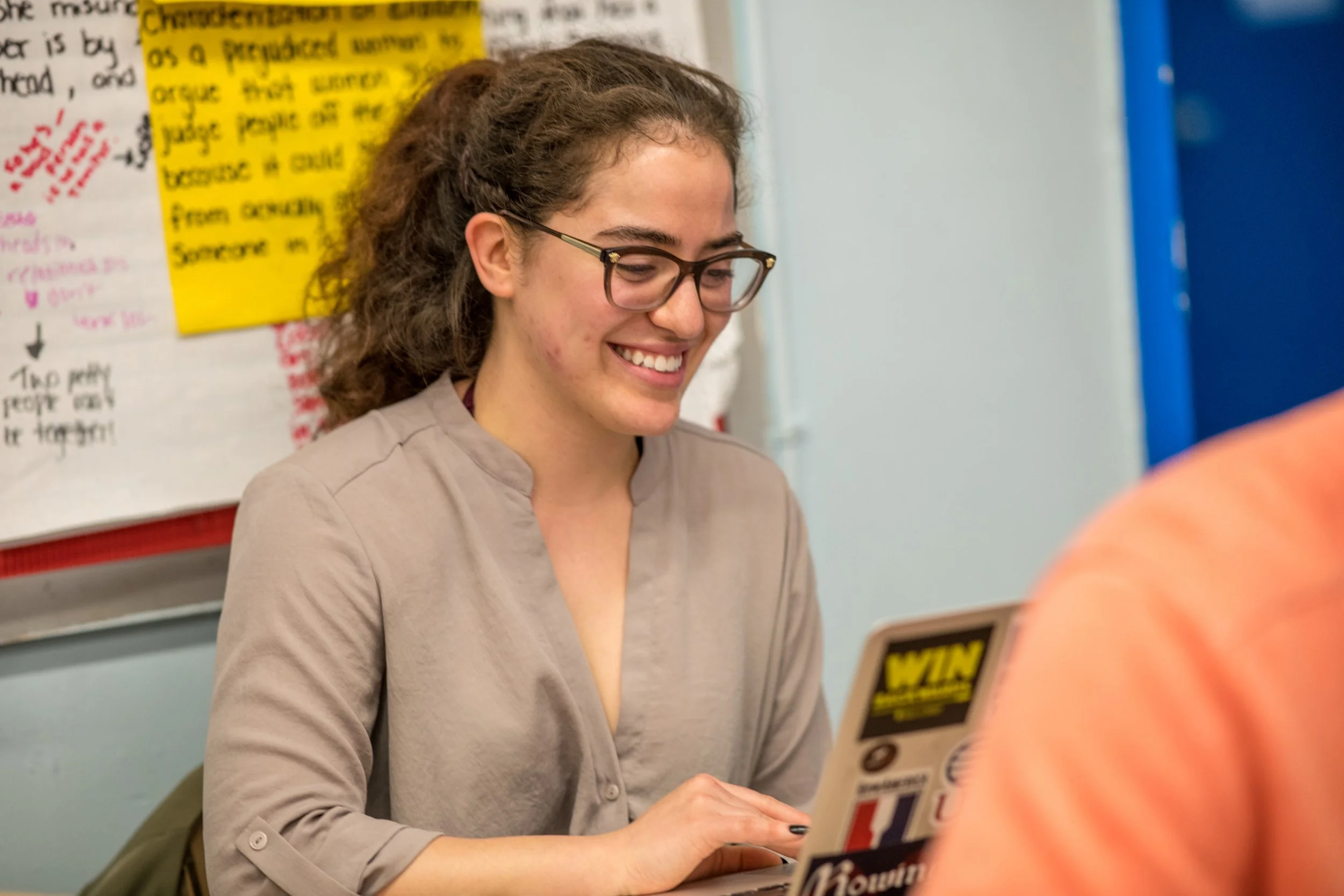
Twice a month, student-athletes will receive academic support. Alongside tutoring sessions and homework help, student-athletes participate in wellbeing, self-defense, and networking workshops from the O.A.R.S. team

See What’s Possible
STUDENT SPOTLIGHTS
Aleeya Marrero
Class of 2018, Student at New York University
“Rowing is a sport where teamwork is absolutely crucial. Without the drive and commitment of each person in the boat, no progression will be made.”